




Lapis lazuli

Physical Information
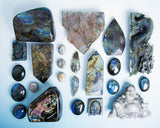
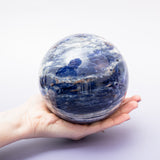
Lapis Lazuli is a deep blue rock, not a single mineral. Its blue colour comes mainly from lazurite. White veins of calcite and golden flecks of pyrite are also common, and they make the stone look like a starry night sky. It forms when limestone is changed by heat and pressure deep in the earth.
For thousands of years the most famous source has been Afghanistan. It is also found in Chile and Russia. Lapis was used in ancient jewellery and was ground into the precious blue pigment ultramarine. It has a hardness of about 5 to 5.5, so avoid hard knocks, water and chemicals. Some lapis on the market is dyed, and sodalite is sometimes sold in its place.
Metaphysical Properties
Lapis Lazuli is known as a stone of wisdom and truth. It is believed to support clear thinking, self-awareness and honest expression. Many people use it when they are learning, making important decisions or looking for a deeper sense of meaning. It has long been a symbol of royalty and the night sky.
It is associated with the third eye chakra and the throat chakra, which are linked to intuition and communication. Many people wear lapis as jewellery, keep it on a study desk, or hold it during meditation. It is also a popular stone for writers, teachers and anyone who wants to speak their truth with calm confidence.


